Monday, October 8, 2012

The Power of Positive doing

All of us know that Thoughts becomes things. So Positive thoughts generate Positive results and Negetive thoughts negetive results.

The challenge is to stay positive when everything around you is going wrong. I found this books quite interesting and would like to share...

An excerpt from
The Power of Positive Doing
by BJ Gallagher
ACTION ALLEVIATES ANXIETY
For many years, I suffered from tension headaches with painful symptoms: impaired vision, sensitivity to light, excruciating throbbing in my temples, and sometimes nausea. They were awful. I consulted with doctors and dentists; I tried various medications; I took up meditation and tried bio-feedback. Some things helped a little bit—but nothing seemed very effective for any length of time.

Then I discovered something interesting—that taking action eased my headaches. Physical action was the best—anything that got my body moving. I could mow the lawn, wash the kitchen floor, workout in the gym, do some laundry, work in the garden, wash windows, wax the car—anything physical. Getting my body into action enabled me to work out the tension that was causing the headaches.

Other types of action worked, too—calling a trusted friend and having a good conversation; having sex (though that isn't always an option); writing in my journal; going for a long, relaxing drive. In short, any action that I can take to dissipate the pent-up tension in my head will do the trick. My head feels better; my neck and shoulders relax; and I feel the satisfaction of having done something.

Perhaps your anxiety doesn't show up in headaches. Maybe you carry your tension in some other part of your body—your back, your stomach, your shoulders, your intestines, your sinuses. Doctors estimate that as many as 80 percent of the physical problems their patients report are stress-induced!

Taking action to discharge the pent-up energy caused by stress can prevent health problems, and can even cure some of the ones you might already have.

Getting started is half the battle. A body at rest tends to stay at rest and overcoming our own inertia is a huge step forward. If you can get yourself to take just one step forward, you're now in motion—and a body in motion tends to stay in motion.

When my car won't start, I call on AAA. When my happiness won't start, I call on the other Triple A—Action Alleviates Anxiety. So can you!

Friday, October 5, 2012

Seize the opportunity...

Its been a while since I wrote... I have been busy at work. The year is fast coming to an end its time to plan for the next year...

I got this note below in an email and thought it was good to share.


Prakash Iyer, Managing Director, Kimberly-Clark Lever and Executive Coach shares two important management lessons he learnt from a 500-rupee note. Read on: -

It happened some years ago but I can recall the evening like it happened just last week.
I was in an audience listening to a motivational guru. The speaker whipped out his wallet and pulled out a five hundred-rupee note. Holding it up, he asked, "Who wants this five hundred rupee note?" Lots of hands went up. Including mine.
A slow chorus began to build as people began to shout "Me!" "Me!" I began to wonder who the lucky one would be who the speaker would choose. And I also secretly wondered - and I am sure others did too - why he would simply give away five hundred rupees.
Even as the shouts of "I want it" grew louder, I noticed a young woman running down the aisle. She ran up onto the stage, went up to the speaker, and grabbed the five hundred-rupee note from his hand.

"Well done, young lady," said the speaker into the microphone. "Most of us just wait for good things to happen. That's of no use. You've got to make things happen." The speaker's words have stayed with me ever since. 'Simply thinking about doing something is of no use' Our lives are like that. We all see opportunities around us. We all want the good things.
But the problem is we don't take action. We all want the five hundred rupee notes on offer. But we don't make the move. We look at it longingly . Get up, and do something about it. Don't worry about what other people might think.Take action.
Several years later, it was another day, another time. And another motivational guru. As I watched him pull out a five hundred rupee note and hold it up for all to see, I thought I knew what he was going to do next.

But he just asked a simple question. "How much is this worth?" "Five Hundred rupees!" the crowd yelled in unison.
"Right," said the speaker. He then took the note and crumpled it into a ball and asked "How much is it worth now?" "Five Hundred rupees!" screamed the audience. He then threw the note on the ground, stamped all over it and picked up the note and asked one more time: "And how much is it worth now?" "Five Hundred rupees!" was the response.
"I want you to remember this," said the speaker. "Just because someone crumples it, or stamps on it, the value of the note does not diminish.
All of you should all be like the five hundred rupee note.

In our lives, there will be times when we feel crushed, stamped over, beaten. But never let your self-worth diminish.Just because someone chooses to crush you - that doesn't change your worth one bit!

Whats your view.... Do share your comments..

Monday, April 2, 2012

Beyond the Price tag?


I saw this picture on Facebook....This prompted me to write this blog...

Let me start with a decliner- I love Lay's and it  is one of the best tasting potato chips in the market.

I am looking at this more on the value? How many times do we look beyond the price tag? If a price is cheap does it mean its low in value?

Often Brands, Advertisement, and peer pressure are the reasons for making financial decisions. I sometimes come across clients who decide on a financial plan because a friend also did it. Its quite a challenge to explain that each of our financial needs are different. 

To compare Value with cost is a challenge. Some of the criteria in assessing are 

Meets the objective- The first criteria is to see if it meets the objective. It cannot be decided on impulse. How many times have you bought something because you think you may need it sometime in the future and never used it. It maybe at a discount but if you don't NEED it, there is no Value.

Reliable- When it comes to food, the most important decision is the reliability of the company manufacturing. The quality control processes in place, the food handling methods, cleanliness and the quality of the raw materials used helps us make the decision. 

Functionality- A lot of times we come across products that are lower price but have more functionalities.

Accurate- Functionality and accuracy go hand in hand. There maybe a lot of functions in a product, but if they do not perform accurately the purpose is lost.

Efficiency- My daughter always prefers a particular brand of pen. She argues that the flow of INK and the smooth movement makes her handwriting look neater when she writes. Especially in exams, when she is trying to race against time.

Coming back to the picture above, What do we get when we look beyond the price tag!!!!!.....

Friday, March 9, 2012

Financial tips for Women

money cartoons, money cartoon, money picture, money pictures, money image, money images, money illustration, money illustrations


The general impression about women and money is that we don't know how to handle it. Although it may not be 100% true, many women do not take interest in Financial planning.

For many money is emotionally connected. Our beliefs about Money and our emotional connections decided how we handle and spend money. Money also affects relationships, love and other matters in our life. There are also sometimes Psychological stumbling blocks that also prevent one from achieving their Financial goals.

Here are some tips to achieve financial independence.

Set Financial Goals-  Having a goal is key to financial success. You need to work out what you want and where you are currently in achieving it.

Spend less earn More- That's the primary step to build wealth.


Be Financially independent - Depending on your spouse or family to handle your finances will not help you reach your goals. You need to be involved.

Watch your Spending- Don't spend to feel good. This can never help you build your self esteem. Look for other ways to boost your self esteem.


Education- Make a conscious effort to learn about money and finance. Read books, attend talks and educate yourself to handle money wisely.

Get involved- Get involved in the day to day spending and accounts of your house.Talk to your spouse about money and how he handles it.

Not late to Start Its never too late to start. So start getting involved and learn to handle your money TODAY....


Monday, February 27, 2012

How to beat inflation?

I recently received this cartoon in an email. Good Humour indeed. But lets look deeper into this...

When strikes me in this Cartoon is that its very clear that depending on Salary alone to Manage Cash flow is not enough. We need to look at Passive income streams that will supplement our income.

Planning to have a good Passive income stream requires diligent financial Planning. Firstly, what is very important is Discipline and Commitment. Able to save for the lean days is like the Ant and Grasshopper story. Its not easy when you see people around you having a good time buying what they want, when you are give up some pleasures for having a better time in lean time.

Robert Kiyosaki, the Author of Rich Dad Poor Dad and designer of Cashflow came, says he invests for Cashflow and not for Capital Gains.

The options that are available are plenty.. to suit everyone's budget and need... One just need to start the journey....

Saturday, January 28, 2012

Financial Resolutions


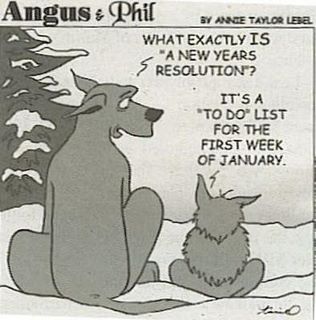
This cartoon Prompted me to write this blog..

Do you make resolutions every year!

When we talk about Financial Resolutions, all of us can have different resolutions that is relevant to us.

- Buy a house,
- Upgrade the car
- Travel overseas
-save for the rainy days
- save for a wedding... etc.etc...

For for anything that has to be financially planned, the first thing to look at is the Cash flow.

- Do you spend less than what you earn monthly.
- Do you save at least 10% of my monthly income.
- Do you have at least six months worth of my income as emergency funds.
- Do you pay my credit card bills and other debt obligations, in full and on time each month.
- Do you have adequate financial protection.

If you have worked out a Cash flow statement of how much you earn and how much you spend,
if you have a surplus then its good. But if there is deficit, then you need to do some serious Budgeting.
The three things that matter for a good Budget-

  • Know what is your Income, 
  • What are the expenses, 
  • when the due dates are for each payment to be made. Budget is time sensitive. 
Once the Budget and Cash flow is done, you need to review it regularly to see the progress towards your goal.

For any resolution to be achieved, constant review is required. Wishing you all the best in achieving your Resolutions...

Saturday, January 7, 2012

Time is Money

When we talk about Money, I often hear comments about how unfair it is that some have so much money and there are many who don't have even the basic for survival..

What stricks me is that many of us forget something very important. TIME. The Rich or the Poor, we all have one thing that is totally fair. We are all given the same amount of time and how we use it is totally up to us.

I would like to share an email I received with excerpts from a book First Thing Every Morning by Lewis Timberlake.

------------
If you had a bank that credited your account each morning with $86,400—with no balance carried from day to day—what would you do? Well, you do have such a bank...time.

Every morning it credits you with 86,400 seconds. Every night it rules off as "lost" whatever you have failed to use toward good purposes. It carries over no balances and allows no overdrafts. You can't hoard it, save it, store it, loan it or invest it. You can only use it—time.

Here's a story that drives the point home.

Arthur Berry was described by Time as "the slickest second-story man in the East," truly one of the most famous jewel thieves of all times. In his years of crime, he committed as many as 150 burglaries and stole jewels valued between $5 and $10 million. He seldom robbed from anyone not listed in the Social Register and often did his work in a tuxedo. On an occasion or two, when caught in the act of a crime by a victim, he charmed his way out of being reported to the police.

Like most people who engage in a life of crime, he was eventually caught, convicted and served 25 years in prison for his crimes. Following his release, he worked as a counterman in a roadside restaurant on the East Coast for $50 a week.

A newspaper reporter found him and interviewed him about his life. After telling about the thrilling episodes of his life he came to the conclusion of the interview saying, "I am not good at morals. But early in my life I was intelligent and clever, and I got along well with people. I think I could have made something of my life, but I didn't. So when you write the story of my life, when you tell people about all the burglaries, don't leave out the biggest one of all... Don't just tell them I robbed Jesse Livermore, the Wall Street baron or the cousin of the king of England. You tell them Arthur Berry robbed Arthur Berry."

Here are six terrific truths about time:

First: Nobody can manage time. But you can manage those things that take up your time.

Second: Time is expensive. As a matter of fact, 80 percent of our day is spent on those things or those people that only bring us two percent of our results.

Third: Time is perishable. It cannot be saved for later use.

Fourth: Time is measurable. Everybody has the same amount of time...pauper or king. It is not how much time you have; it is how much you use.

Fifth: Time is irreplaceable. We never make back time once it is gone.

Sixth: Time is a priority. You have enough time for anything in the world, so long as it ranks high enough among your priorities.
----------

Have a wonderful day and Prioritize your day well in advance so that you dont end up having a huge " LOST ACCOUNT".
Do post your comments.

Tuesday, August 9, 2011

Rating downgrade for US

In 1997, when the Asia had a financial crisis, the G7 and IMF came up with a regulations, and conditions to resolve the situation.

Now that the developed economies have a crisis, who is going to resolve this matter.

Today some of the best monitored and regulated Countries are in Asia. This is indeed a Proud moment.

The truth however is that whatever mess US or Europe is in, We still are linked to their problems as they an important link for the growth. We are dependent on them for technology and also consumption.

So the bottomline is it doesn't matter if US is AAA rating or AA+. we still need them for our growth.

Friday, January 28, 2011

The seven "R"s for 2011

January is always packed with talks and seminars on how the year will turn out to be... and from one such talk, I compiled the list of "R"s that can affect the investment markets this year.

First R- Reflate the US market. US is facing deflation and the challenges faced by the economy and the measures taken to reduce the Deflation could impact the world market.

Second R- Rebalance Asia. While US is facing deflation, Asia is facing high inflation. The inflationary pressures are huge and that could have a negative effect on the market.

Third R- Resolve the Eurozone Debt Crisis. PIIGS- Portugal, Ireland, Italy, Greece and Spain were in serious debt crisis in 2010. How they manage it this year will have an impact on the markets.

Fourth R- Remember S&P 500. Historically, if the first 5 days of S&P trading is up, S&P ends up high end of the year. This has turned out to be true for 37 time of the last 41 years.

Fifth R- Rally in US markets in the 3rd year of the US presidential term. Again, statistics shows that the 3rd year of the US presidential term has always had a market rally and on a average the markets have risen more than 10.5%. This statistic is particular true especially in the first term of a new president.

Sixth R- Year of the Rabbit. CLSA does forecast every year on how the Chinese year will be. To read the full review please go to the link below. These are for Hong Kong Market. Overall, their prediction is that the Hong Kong Market will do a bunny leap this year.
https://www.clsa.com/index.php

Last and Seventh R- Reality. The speaker tweaked the words of Forrest Gump- My Mama said, market is like a bag of chocolate. You never know what you will get.

Saturday, September 25, 2010

3 steps to your Financial goals setting

Planning is a loborious process and when we break down the process to steps its easier to understand and execute.
The 3 main steps to Financial goal setting are
  • What you have
  • What you want
  • How to achieve it.

What you have:

Reviewing current financial position is very important process. If you are in a lot of debt and want to save a million, it doesnt make sense, as reducing the debt is the priority before saving. A very easy process would be do a simple cash flow and find out how you are spending the money you earn. ( I have a template and if you want to use do email me)

What you want:

For this question, sky is the limit. A realistic goal which also takes little steps is achievable. Breaking down long term goals to small achievable short term goals is the best way to work this out.

How to achieve it:

For this step, categorising the goals is important. Savings, investment, protection, retirement etc. There maybe some overlaps too. This step requires time with your financial advisor to come up with a goal.

Tuesday, January 26, 2010

Some interesting Outlooks for 2010

January is generally busy for me as I attend a lot of Market outlook talks from different people- fund houses, analysts, and even laymen who are Pro in investing...

Here are some views to ponder on....

  1. 2nd Year of US Presidency- Historical data of the market has done well in the first year of a Democrat President. ( exception of Mr. Jimmy Carter) and keeping in line with that the first year of Obama's presidency the market has gone up by 30+%. The second year has always been flat and so based on that, some analyst expect this year to be flat.
  2. Decennial Year- Year ending with 0...2010- Again going back to early 1900, every year ending with a 0 has not done well or the market is flat... so some are expecting the same for 2010...
  3. 4 year Market cycle- When it comes to Market timing, the Pro's always argue that there is a pattern and its very easy to find. The four year market cycle. The last low was in 2006. So you can work back words and forwards to get the market lows. http://www.tradersnarrative.com/the-amazing-four-year-stock-market-cycle-867.html
  4. Financial Astrology- Staying in Singapore and not looking at what fung Shui predictions are is a must. The Metal Tiger Year- 2010 - The Year of the Metal/White Tiger, (which begins auspiciously on February 14th when Valentine's Day is also celebrated.) This is the Yang Metal Tiger Year. Yang Metal over Yang Wood. Tiger = Yang Wood. Inside the Tiger, there is Wood, Fire and Earth elements. Tiger is the mother of Fire = Wood = seed of Fire. Unfortunately, Metal destroys Wood, so this is a destructive cycle and have conflict relationship. In short this is not a Peaceful Year according to Fung Shui.
My views - In the Financial scene, inflation could be a major issue that has to be resolved. The stability of US economy will will important for the rest of the world.

So this year I expect volatility however, there is also be a lot of opportunity to enter the market especially if one didn't do it in March 2009.

Any other views.....

Friday, January 15, 2010

How important is Networking for your job?

I would confidently say that most of us are knowledgable and competant in our field of work.
I would like to argue that, the only difference between a sucessful person and some not so, is how good he/she is in networking.

In this highly compitative world, how you present yourself, makes the difference.

Yesterday, I attended a Networking session and I would like to share what I learnt there.

1. There should be a GOAL for anything we do. Doing something just because someone else is doing will not be effective. A football game with just passing the ball around is not going to get any crowd in. How many Goals a team takes is what classifies a good team from another.
Similarly, Networking with the right group is very important.

2. Learn to tell what you do instead of telling what you are. I am a teacher, I am an advisor, I am an accountant doesnt tell anything about you. I teach children on Money management, I help clients grow their wealth says a lot more about me than just the title financial advisor.

3. Meet as many people as you can and remember to stay in touch after the meeting. Email, telephone calls are the fastest way to stay in touch.

In any industry, knowing people and to be known is important and hence, Networking is a key to success. I hope these tips are useful to you and do send me your views

Quote for this weekend is

Diamonds are nothing but a chunk of coal that stuck to their jobs.... M.S Forbes

Monday, January 4, 2010

Starting the new dacade...Year 2010

Time really flies... its so recent in memory when there was so much of talk about the Millennium bug and all the problems we could have because of the date formats...

Today is technically the first working day of this dacade..

& I wish all the very best.

To start of with... I plan to have quotes for the beginning and ending of every week.. to keep us all going.....and here's my first selection....


Believe in yourself, and the rest will fall into place. Have faith
in your own abilities, work hard, and there is nothing you cannot
accomplish.- Brad Henry


Have a great week,,, Swarna

Sunday, December 13, 2009

Protect your home

In the first 11 months statistics show that fire in homes has increased considerably. There are many reasons but most common one is Electrical overload and carelessness. Now with festive season around, almost all houses have electrical decorations, christmas trees etc.

The fact to note when there is a fire in one apt, it can cause external & internal damage to apartments above and below.

HDB/ Private property management and even Banks who offer the loan, makes it compulsory for all to take basic fire insurance. This covers the external walls and common area.

However, if there is a fire upstairs and your ceiling is damaged, this will not be covered by the HDB. You have to bare the costs of repairing the ceiling or false ceiling. If you are going to sue your neighbor upstairs, you will have to sort it out legally, which can be very cumbersome.

An easy way to handle such situations is to have a home content plan. This plans will cover the renovations & home content and much more. These types of plans also cover public liability, example should there be fire in your place and causes damage to your neighbors home, the cost of repair, legal cahrges etc, will be borne by the insurer.

There are always add-ons to Home content insurance. You will be covered for theft, loss of valuables, personal accident, and home protection when you are traveling overseas.

Again, the home content insurance has a range of premiums from different insurers.

In this high paced lifestyle we live in, we cant take anything for granted. Its always best to transfer RISK to someone who can handle it better.

Moneysense Bookmarks


Thursday, December 10, 2009

Pyramid of Needs for Wealth management

Pyramid is used to in different needs analysis. Food, behavior, money etc.
When analysing why people do what they do, Abraham Maslow, a humanistic psychologist, developed a simple tool to explain why people do things. This is called Maslow's theory. He and other researchers found that people were motivated to do things by their basic human needs. He put these needs into the shape of a triangle with the basic human needs - Physical, Safety and Social needs at the bottom and the higher human needs like Self esteem, self fulfillment at the top.

Working on the same principle, a good financial plans must address the basic needs first before the social and emotional need.
So doing it as a pyramid, its often represented as shown in this figure
Financial plans fail when the pyramid is not balanced as it should be. If priorities on the top of the pyramid are addressed before the base, it would end up in a out of balance and hence fail.
This is a simple but a very effective tool I use to analyse any financial planning. You can review yours too and send in your comments. Swarna

Tuesday, November 24, 2009

Lifestyle Planning

Lifestyle is an important part of our lives. Everyone has a different description of Lifestyle. The most important thing is what ever maybe the lifestyle needed, one has to plan financial to achieve it.

Planning has to be done to


  • identify the need,

  • the money needed for that lifestyle,

  • the time available

  • how to acheive it.

The first step is quite simple. Lifestyle to travel overseas every year, need a holiday home, a sports car, a luxiourious home by the beach, etc etc. It can also be a simple second home, a financial free retirement. So you need to know how much you need.


The very important factor in planning is the time you have and the method you acheive it. The earlier you plan the higher the amount. This chart shows a simpe computation of Time value of Money.

Once you decided to save, the the risk that you can take has to be decided. If you dont want risk, the returns will also be low. High risk, High returns.

The options are
  • FD in a bank for abour 1%-2% interest rate

  • Bonds or tresury bills- 2-4% returns

  • Balanced funds with exposure to bo equity and bonds with about 5-9% returns

  • Equitiues either as Shares, Unit trust or Managed accounts with a potential return of more than 9%
Time is crutial to any planning. The earlier you start the higher the returns you can reach. Also, the amount needed will be lower.


Sunday, November 22, 2009

Income vs Expense

Time and again, we have to go to basic to manage the income vs expense matrix.

There has been a lot told and written on how to manage the balance and of course ultimately save for a better living standard. Pyramid of needs, NEEDS vs WANTS etc.

Yesterday I attended a workshop on Money sense conducted by a STAR trainer called Abu.
His success story is very interesting on how a GOAL in life is so important (www.abangabu.com)

I would like to share some interesting ways he uses to manage money.

He uses the Compass to explain it in a simple way. Like the compass helps a person lost in a jungle to move to civilisation, the financial compass can help spend wisely and hence mange money well.Now looking at the financial compass, E- stands for Essentials. Food, clothing, children's education, house rent/mortgage payments, medical expenses all go into this category. This can constitutes upto 60% of your income.

N- signifies Necessities. Education, insurance, medical cover, savings etc come under this category. Up to 40 % of your income should go into these expenses.

Both these categories should be High priority in any ones financial plan.

Now looking W- Waste, things that account for unplanned items like spending on taxi because of waking up late, eating out unnecessarily. You can look back at your spending patterns and identify what you can categories under this. At anytime, this portion of expenses shouldn't be more than 5% your income.

Last but not the least is S- STUPID, SILLY expenses. These expenses are those we do to satisfy our False Prestige or EGO. To show off that we are doing well when the fact is not so.

Talking about this section, a lot can be said about how the RICH present themselves. For example, Warren Buffet the richest man on Earth, says his success is Simplicity. He still lives in a house he bought with his first income, travels by economy class and doesn't buy things he doesn't need. There are a lot of such examples.

Like the saying goes " Empty Vessels make more noise" its always the not so financially savvy who spend on POMP & SHOW. This component of expenses shouldn't be more than 5% of the income.

So, using these NEWS categories, one can easily plan for financial freedom. So next time you go shopping take your COMPASS along.

Tuesday, September 29, 2009

Financial Psychology

Have you ever wondered why money seems to work so well in some people’s lives and so destructively in others? Why some people control money while others allow it to control them? Or why some of us can manage it so effortlessly to fulfill life’s plans and goals, while others never stop to question how they want it to serve them?

Questions like these are not typically explored. Why not? Its probably because the answers do not lie in cold financial facts. One must look at both the financial and psychological factors involved in money matters to make sense of why people do what they do with money.

Emotions, culture, religion and personality has the major play while talking about Financial psychology.

Culturally, many societies have a believe that Money is evil, and cause of evil. So this is ingrained in the mind since young. So as adults, there is an aversion to money.

Most religion preaches against Greed and somehow Money gets associated with Greed.

Personality. There are many money personalities and the blue print for each is different. This has to be evaluated and analysed.

You only attract what you want subconsciously. That is the reason why we find different people having different ways of handling money.

If you are keen to know more about your personal money blue print, do give me a buzz... Swarna

Wednesday, March 11, 2009

Financial Literacy

Many people have asked me " why is the markets behaving like this all of a sudden? Why is credit crisis in US affecting us in Asia, etc. etc...

This proves one one thing. Financial literacy is very low. We all know about earning, saving, spending etc. but how to make the best of what we earn is something one has to learn.

Today, I want to talk on some books that a good to start the learning process. You can see some favorite books under my Money books.

I am not going to review any book in particular but most books want to convey the message of good Money management and how to achieve it. Here are some points which are important aspects of Money management
  • Make financial security a priority- For everything in life we need a Goal. Without a priority in place, its like driving in the dark. Its also important to have a budget to work on.
  • Spend less than you earn- Isn't it logical to say spend less than you earn. However, most of us have problems doing it. Its not what you make, its what you spend makes the difference.
  • Save and invest regularly.- Its important to save and do that regularly. Its important to have a habit of saving and investing instead of do it by chance
  • Pay down debt - The credit crisis now is an example for debt management. Credit card is just for convenience and treat it like the ATM. you can draw out only your money when u go to an ATM, isn't it?
  • Own a home- According to Federal Reserve in USA, home owners save 34% more than renter. I think in Singapore, thanks to our visionary leaders, 95% of Singaporeans are home owners. However, the key point to consider a home, is it should be within the budget and affordable. If not in times of despair, losing a house is a problem. This is the major problem in USA now.
Read some of these books listed below and send me your views. If there is any other book you like and would like to share with me do let me know.

Signing off with this quote-"Education is a progressive discovery of our ignorance"-Will Durant (1885-1981) U.S. author and historian